When the conversation turns to data center jobs, it usually focuses on the construction jobs at the start of a project and ends with a handful of technicians, office workers, and other personnel who staff the completed facility after it goes live. However, data centers create many more jobs than those at the work site or facility itself. All the switchgear, chillers, structural steel, and generators in those facilities must be made somewhere, and that demand is translating directly into American factories.
The numbers behind this demand wave are staggering. According to a 2026 research report commissioned by the Data Center Coalition from PwC, the U.S. data center industry employed more than 1 million people in 2024 alone, and each of those jobs indirectly supported an average of 4.5 additional jobs in the U.S. economy at large. Jobs supported by capital spending from data centers rose 56% between 2023 and 2024, while labor income from that spending rose 59%.
Jensen Huang, CEO of leading chipmaker NVIDIA, said in a May 2026 press release that artificial intelligence (AI) is creating a “once-in-a-generation opportunity to reinvigorate American manufacturing and supply chains.” The job numbers seem to back up that statement.
The Race to Power the Data Center Boom
Power availability has become the defining roadblock of the AI era. The equipment used to generate and move power is in extremely short supply as utility providers and data center developers seek to upgrade infrastructure or generate on-site power to support new facilities. Lead times for many critical electrical components have reached 18 to 36 months, according to Wood Mackenzie.
Closing that gap falls to manufacturers, who are hiring in droves as they struggle to meet demand. Here are some examples:
- Siemens, a global component manufacturer, invested $165 million to expand its facilities in North and South Carolina and is training workers from retail and food delivery backgrounds for manufacturing jobs.
- Eaton plans to open a new campus to produce power distribution technologies in 2027, which is expected to add 200 jobs. The company also plans to add 300 jobs at a North Carolina plant.
- Hitachi Energy recently broke ground on a transformer plant that will create more than 800 jobs.
A New Market for Old School Manufacturers
Power component manufacturers aren’t the only ones tapping into the data center boom. Companies that have made heavy equipment for generations are experiencing a spike in demand as well, which has resulted in a wave of hiring across the country:
- Innio is hiring 500 people at its 120-year-old engine plant.
- Generac has added 800 employees over the last two years to make industrial generators.
- After landing a $4 billion deal to make chillers for data centers, Modine is hiring 300 employees at its Franklin, Wisconsin plant.
- Vertiv is expected to add hundreds of jobs through 2029 as it ramps up cooling equipment production in Ohio.
Steel and metal fabricators are riding the wave, as well, which is no surprise given that a single hyperscale data center may require up to 20,000 tons of steel. Nucor has launched a dedicated business unit to serve data centers, while Future Form has tripled its manufacturing and warehouse space in only two years thanks to the data center business. Smaller suppliers are scaling up too, such as Georgia’s Southeastern Hose, which had to double its workforce to keep up with the skyrocketing data center business.
Existing Facilities: The Backbone of the Data Center Boom
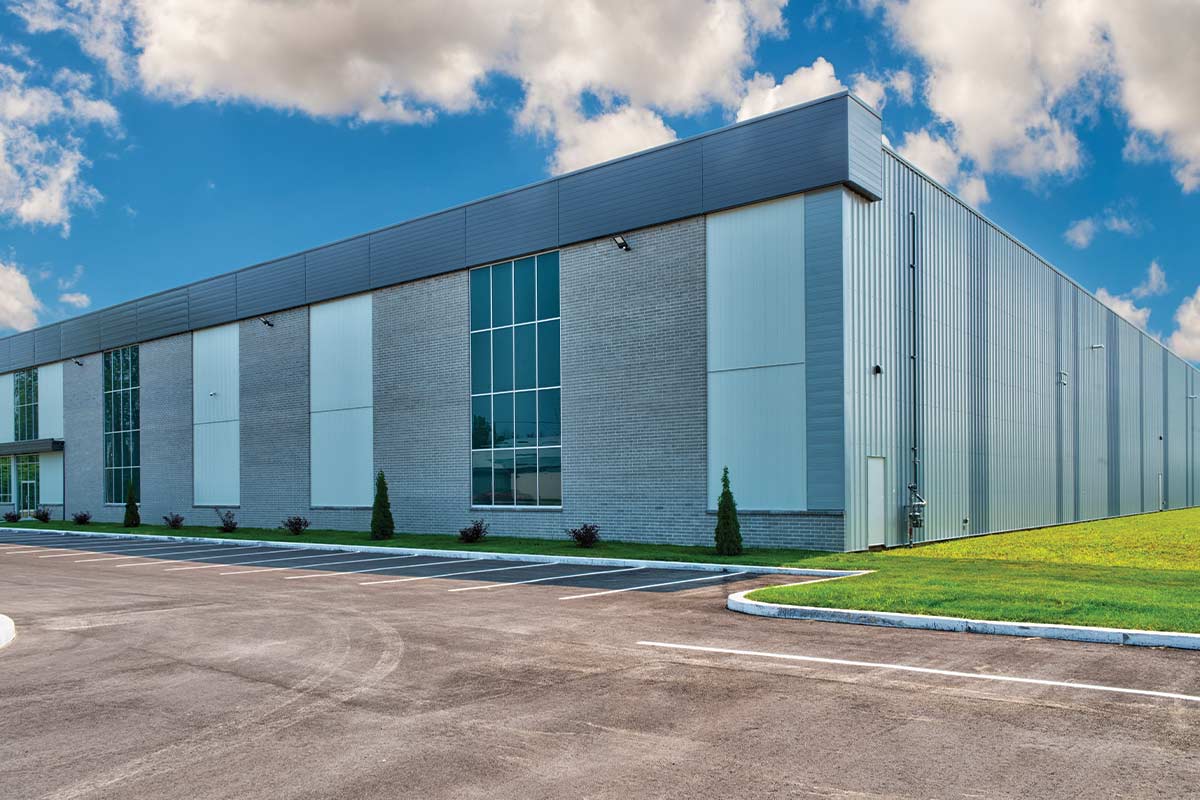
While some organizations are expanding into new greenfield builds, it’s notable that many of these success stories are happening at existing facilities, such as Innio’s 120-year-old engine plant in Waukesha, Wisconsin. Similarly, Generac and Modine both purchased existing factory space to hit the ground running rather than waiting on new builds.
With equipment backlogs stretching for years, suppliers can’t afford to wait on long projects held up by equipment and material backlogs. To meet demand, data center suppliers are looking at established facilities that they can upgrade and staff quickly.
“Data centers are exciting and flashy and get most of the headlines,” says Frank Crivello, founder and chairman of Phoenix Investors. “But the manufacturers supplying those data centers are good at creating jobs, and they’re doing it even in markets that have no data center presence. Revitalized industrial buildings let these suppliers ramp up production and put people to work quickly in a way that a greenfield build can’t.”
Phoenix Investors has a nationwide portfolio of industrial real estate, including revitalized industrial facilities well suited to serving the data center supply chain. If your business needs to scale up production quickly, reach out to see how we can help.
About Phoenix Investors
Founded by Frank P. Crivello in 1994, Phoenix Investors and its affiliates (collectively “Phoenix”) are a leader in the acquisition, development, renovation, and repositioning of industrial facilities throughout the United States. Utilizing a disciplined investment approach and successful partnerships with institutional capital sources, corporations, and public stakeholders, Phoenix has developed a proven track record of generating superior risk-adjusted returns while providing cost-efficient lease rates for its growing portfolio of national tenants. Its efforts inspire and drive the transformation and reinvigoration of the economic engines in the communities it serves. Phoenix continues to be defined by thoughtful relationships, sophisticated investment tools, cost-efficient solutions, and a reputation for success.
PHOENIX INVESTORS